Your Preliminary Design is Complete….
Now What?
As the preliminary design phase of your project comes to a close and you receive your final closeout package of deliverables, you maybe wondering what the next step looks like. At BGW, the intermediate phase [Phase 2] that follows preliminary design, is a duel track phase. On one track, BGW will be walking alongside you through the entitlements process of zoning and planning department approvals and engaging with a civil engineer to conduct a site survey. At the same time, the church will likely be working on building momentum and preparing for construction by engaging with trusted professionals in fundraising, financing and a range of other services.
The following is an overview of the Phase 2 process, the architectural support services that BGW will provide through this process, and the strategic partners we will introduce you to that can help get to the finish line of construction.


Planning & Zoning
The planning and zoning track is crucial to gaining the proper approvals from your local municipality (city or county planning department). Many times this process begins with a “pre-application” meeting with city officials in which Planners, Fire Chief, and other city engineers give comments to the submittal process and feedback on the best path to move forward.

Each municipality has a unique path and set of requirements, but it will typically involve some type of submittal that uses terms like Design Review, Site Plan Review or Conditional Use Permit (CUP). The timeline for this process can vary but the first step is typically to solicit proposals from a local civil engineer. BGW will assist you in the solicitation process and once a civil engineer is on board, BGW will consult with them to determine the best path forward for the site. BGW may charge fees for this phase depending on the amount of time required by our team.
Below is a rough outline of what this Planning/Zoning Track looks like:
- Soliciting/Selecting Local Civil Engineer – BGW will assist you in soliciting proposals from several civil engineers and selecting the one most qualified for your specific needs. We will help you to identify the specific areas of expertise needed from the civil engineer as well as clearly outline the specific project requirements, size, complexity, and timeline.
- Pre-Application Meeting – BGW will assist you in coordinating a pre-application meeting with city or county planning officials. This is a free, informal meeting that most municipalities offer to discuss a potential development project before formally submitting an application. This meeting will allow us to receive guidance on required documents, applicable regulations, potential challenges and the overall development review process.
- Submittals for Site Plan / Design Review – The civil engineer and BGW Architects will then prepare and submit a preliminary site plan and any other required documentation to the city’s engineering and planning departments. The preliminary site plan serves as a conceptual overview of the proposed development, which can then be refined into a more detailed site plan for building permit review. These plans undergo review by various departments to ensure the proposed development complies with city regulations, zoning laws, and other relevant requirements.

Each municipality has a unique path and set of requirements, but it will typically involve some type of submittal that uses terms like Design Review, Site Plan Review or Conditional Use Permit (CUP). The timeline for this process can vary but the first step is typically to solicit proposals from a local civil engineer. BGW will assist you in the solicitation process and once a civil engineer is on board, BGW will consult with them to determine the best path forward for the site. BGW may charge fees for this phase depending on the amount of time required by our team.
- Approval of Site Plan / Design – Once the plans have met all the requirements of the planning department, they will issue an approval. This approval will be valid for a designated time limit, typically 12 – 18 months, although extensions are available. If your project will not be moving forward for a few years or plans have gone on hold after approvals, you will want to have a clear understanding of the requirements for submitting for extensions.

Strategic Alignment
The strategic alignment track is most importantly about building and maintaining momentum as you grow spiritually, financially and in attendance to the point that you are ready to move forward into the construction documents phase.

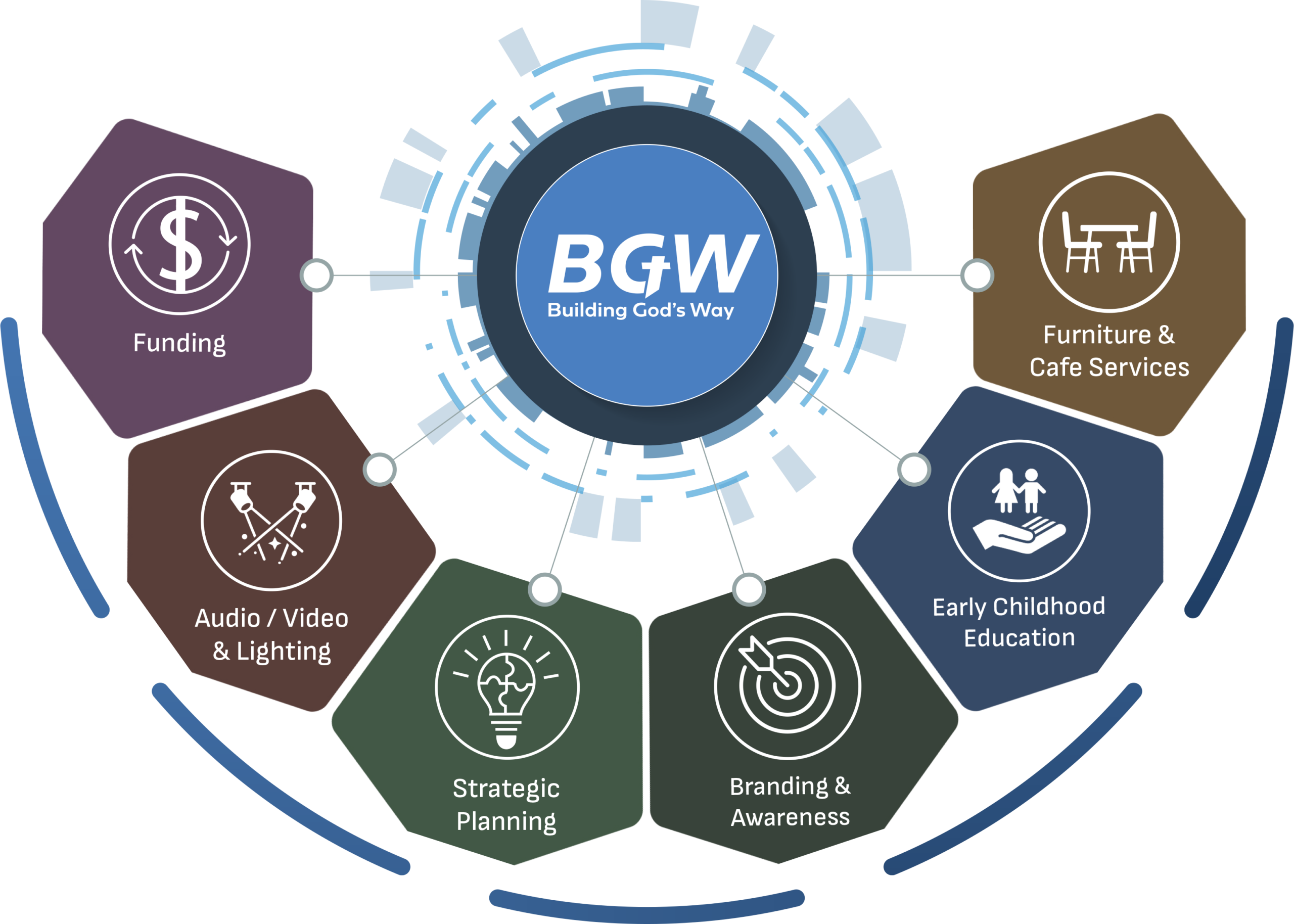
Every ministry is unique, so the expert consultation and services you will require during Phase 2 will be unique. While some ministries might be in a financial position to move forward immediately after preliminary design, the vast majority of our clients will need to engage in a capital campaign and possibly explore financing options in order to close the gap between available resources and vision.

For churches planning to build or remodel a sanctuary, and for Christian schools planning a new performing arts theater, we would highly recommend engaging with a firm that specializes in the design and installation of audio / video & lighting systems that are customized to your specific needs. While A/V/L firms are typically brought on board later in the process after the architectural drawings are completed, our strategic partner is integrated from the very earliest stage of design, working right alongside the BGW architecture team.

Some ministries benefit greatly from going through a proven strategic planning process that can help their leadership team to clarify their vision and purpose, define clear objectives, set realistic timelines, and move forward with strategic impact. Others may have a specific need to engage in a branding and awareness campaign in order to ensure that the ministry’s unique identity and “story” is incorporated into the aesthetics and way-finding of the facility to reinforce your values and create a desired experience or emotion for visitors.
If you are planning to incorporate a financially sustainable component into your facility design, such as a cafe’ or an early learning center, now is the perfect time to engage with the professionals that can help you determine the best path forward, including the feasibility and logistics involved.
Over the years, BGW has assembled a network of trusted strategic partners around the nation that deliver proven results in key areas of need for our ministry clients. Although we have no financial arrangement with any of these organizations, they are all strategically aligned with BGW in mission and purpose and have delivered consistent results for our clients. Click on an icon below to learn more about our key strategic partners that can offer excellent support services to your ministry during Phase 2.